
Rising labor costs, tighter margins, and increased regulatory scrutiny mean that how restaurants handle tips, service charges, and employee pay is no longer just an operational choice. It is a compliance decision with real financial consequences.
Layer on technology-driven “tipflation”, federal tax policy changes, and evolving customer expectations, and the very definition of a “tip” is shifting in real time.
While tax relief opportunities and labor-related deductions can offer meaningful upside, they do not override long-standing rules around tip ownership. Service charges remain distinct from tips. Managers and supervisors generally cannot participate in tip pools. Distribution methods, timing, and documentation still matter, arguably more than ever.
Tipflation changed behavior, not just percentages
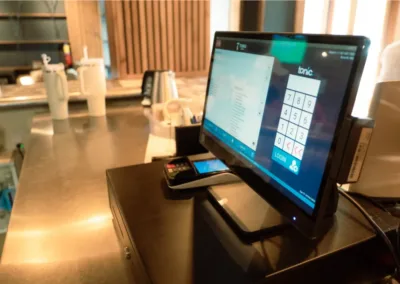
Modern point-of-sale systems have fundamentally altered how and when customers are asked to tip. Today, gratuity prompts often appear before a transaction is complete, not after service has been delivered. That shift has expanded tipping far beyond traditional full-service restaurants into takeout, counter service, and self-service environments.
As a result, tipping is no longer a passive end-of-meal decision. For many guests, who to tip and how much is now part of the decision to order at all, especially for takeout.
Consumer sentiment reflects that tension. Nearly 70% of Americans report dining out less, and many say they are tipping less often or at lower amounts, citing fatigue and uncertainty around tipping expectations. In takeout scenarios in particular, guests are increasingly unsure whether a tip reflects service, system prompts, or social pressure, and some opt out of the purchase entirely.
This matters because tip behavior is not just changing at the table. It is changing upstream, before the order is placed.
The operational impact on tip pooling
As tips arrive from more channels, including dine-in, takeout, kiosks, and mobile orders, the risk is not just internal disagreement over payouts. There is an inconsistency in classification, reporting, and compliance.
Strong tip systems turn tipping into a predictable process instead of an ad hoc judgment call. Integrated POS tools can help manage tip capture, pooling logic, and transparency, reducing confusion and freeing teams to focus on service rather than reconciliation.
The challenge is that while tipping looks simple to the guest, it becomes increasingly complex behind the scenes.
What the guest sees vs. what the restaurant must manage
| What the Guest Sees | What the Restaurant Must Manage |
| Suggested tip percentage on a screen | Tip versus service charge classification |
| One total on a receipt | Tip pool eligibility rules |
| “Tip added” confirmation | Payroll reporting and tax treatment |
| Optional gratuity | Compliance documentation and timing |
This gap between what guests experience and what restaurants manage is where most friction starts and where technology either helps or hurts.
When checkout tools are designed without context, they shift complexity onto guests and risk onto operators. When payment experiences are built intentionally, they can do the opposite. They clarify expectations, reduce pressure, and create consistency that holds up behind the scenes.
That is the difference between technology that adds steps and technology that actually solves problems.
As tipping norms expand, the stakes get higher
As tipping becomes more visible, more frequent, and more emotionally charged, the distinction between tips, service charges, and wages becomes operationally significant, not just philosophically interesting.
When this expanded tipping environment collides with recent tax policy changes, the cost of getting it wrong increases.
Permanent pro-growth tax policies and why systems matter
The Working Families Tax Cut, often referred to as the One Big, Beautiful Bill, introduced a suite of pro-growth tax provisions designed to strengthen restaurants and foodservice businesses nationwide.
These policies offer real advantages, but only if operators have systems in place that can support them.
Permanent expensing of capital equipment allows restaurants to invest in kitchen upgrades, technology, and infrastructure without spreading deductions across multiple years. The continued 20% Qualified Business Income deduction benefits roughly 77% of restaurants structured as pass-through entities, providing predictable tax relief that supports reinvestment.
The restoration of depreciation and amortization to the business interest expense deduction has freed up capital for debt reduction, remodels, or expansion. Permanent tax credits for family and medical leave help offset the cost of supporting employees. Estate tax relief improves continuity for family-owned restaurants navigating generational transitions.
The bill also introduced No Taxes on Tips and No Taxes on Overtime, allowing tipped employees to deduct up to $25,000 in tip income and hourly employees to deduct up to $12,500 in premium overtime pay from federal taxable income between 2025 and 2028. This represents a meaningful boost to take-home pay without increasing employer labor costs.
But these benefits depend on clarity. Tips must be clearly defined, properly distributed, and accurately reported for employees and employers to fully realize the upside.
Stability is the advantage
Inflationary pressures, tight labor markets, and shifting tipping norms mean operational stability is no longer a “nice to have.” It is a competitive advantage.
When customers feel confident about tipping expectations, when employees trust tip distribution, and when payroll and reporting align with policy gains, restaurants create environments that support retention, performance, and sustainable growth.
Better systems create safer, smoother service for everyone. Schedule a Tonic POS demo.
Cited:
“Should You Tip on Takeout?” MSN, Day Month Year, https://www.msn.com/en-us/money/personalfinance/should-you-tip-on-takeout-an-etiquette-expert-weighs-in/ar-AA1Vun05.
U.S. Department of Labor, Wage and Hour Division. “Tipped Employees Under the Fair Labor Standards Act (FLSA).” U.S. Department of Labor
www.dol.gov/agencies/whd/fact-sheets/15-tipped-employees-flsa
Internal Revenue Service. “Tips Versus Service Charges.” IRS, www.irs.gov/pub/irs-news/FS-15-08.pdf.