
If you’ve ever ordered an Animal Style burger at In-N-Out, a Pink Drink at Starbucks, or a Chick-fil-A hack you saw on social media, you’ve already experienced the secret menu effect.
Secret Menus : Popularity Demands
Most secret menu items aren’t created by brands. They’re built by customers using ingredients already in your kitchen.
When those custom orders repeat, especially across shifts, days, or locations they stop being one-offs.
They become patterns.
And patterns tell you what your customers actually want, not just what you offer.
Where Menu Engineering Comes In
Menu engineering is understanding two things: what sells and what makes money.
The challenge is that most menus are analyzed at a high level. You see what items perform well, but not always how they’re being ordered.
That’s where gaps start to form.
What Gets Missed
What’s harder to see without the right data is how those items are being ordered. You want a return on investment and taking a deeper look into what is consistently being ordered.
A sandwich might be your best seller, but what if most customers are adding the same extras every time? A drink might look average on paper, but what if a specific modification is driving repeat orders?
These details are easy to miss, especially during busy shifts. But they’re often where the biggest opportunities are hiding.
- Adding the same extras every time
- Making consistent substitutions
- Ordering variations that aren’t formally tracked
Those details affect both demand and margin, but they’re easy to overlook without clear visibility.
Using That Insight
You don’t need a full menu overhaul to improve performance.
Start by looking at how your best-selling items are actually ordered. If the same modifications keep appearing, there’s usually an opportunity to simplify, adjust pricing, or make that variation easier to order.
Small changes here tend to have the biggest impact because they’re based on real behavior, not assumptions.
Why Your POS Matters
This level of insight depends on your system.
If your POS only shows item-level sales, you’re missing how orders are built. If it captures modifiers and patterns clearly, you can see what’s driving both volume and profitability.
That visibility makes menu engineering practical instead of theoretical.
Where Tonic Fits
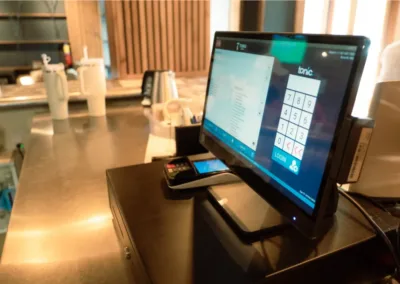
Tonic is designed to make that kind of visibility easier.
It helps operators see how orders are actually coming through, not just what’s listed on the menu. When patterns start to form, they’re easier to spot and act on.
That includes something a lot of systems miss, order comments.
In many restaurants, staff rely on comments to capture custom requests. The problem is those comments usually disappear in empty space. They’re not tracked, not analyzed, and not turned into anything actionable.
Over time, that means missed patterns and missed revenue.
With Tonic, those comments can be surfaced and turned into structured modifiers in just a few clicks. What starts as a one-off request can quickly become a repeatable option that is easier for staff to ring in and easier to track.