Why Operational Visibility Matters More Than Ever
Cash management remains one of the most important operational responsibilities for retailers, restaurants, convenience s
tores, and service-based businesses. Even as digital payments continue to grow, poor cash handling procedures still create significant financial risk.
For many businesses, revenue loss does not happen through one major incident. Instead, losses often develop gradually through inaccurate drawer counts, excessive no-sale activity, inconsistent reconciliation procedures, employee mistakes, or weak accountability standards. These small discrepancies may appear minor at first, but over time they can significantly impact profitability.
Modern businesses need stronger operational visibility to protect margins, improve accountability, and reduce unnecessary shrinkage. In many environments, businesses are also reevaluating how payment acceptance costs affect profitability, leading to increased interest in transparent pricing models such as dual pricing. When implemented correctly, dual pricing can improve customer clarity while helping businesses manage the cost of card acceptance more effectively.
Understanding Cash Management Controls
Cash management controls are the procedures businesses use to monitor, secure, reconcile, and report cash activity throughout daily operations. Strong controls improve visibility into how money moves through the business while reducing opportunities for theft, fraud, administrative errors, and operational inconsistencies.
When paired with transparent payment practices and clearly communicated pricing structures, these controls also create a more consistent customer experience. A business that can clearly track cash, card, refunds, voids, no-sales, and drawer activity is better positioned to identify where losses are occurring and how to prevent them from repeating.
Without structured processes in place, small operational issues can quickly become larger financial problems.
The Real Cost of Shrink
Shrink refers to revenue losses caused by theft, administrative errors, transaction mistakes, inventory discrepancies, and unrecorded activity. Many business owners underestimate how often small inconsistencies occur during normal daily operations.
Repeated cash shortages, excessive voids, untracked discounts, or frequent no-sale events can slowly reduce profitability without immediately drawing attention. Over time, even small discrepancies can create substantial annual losses.
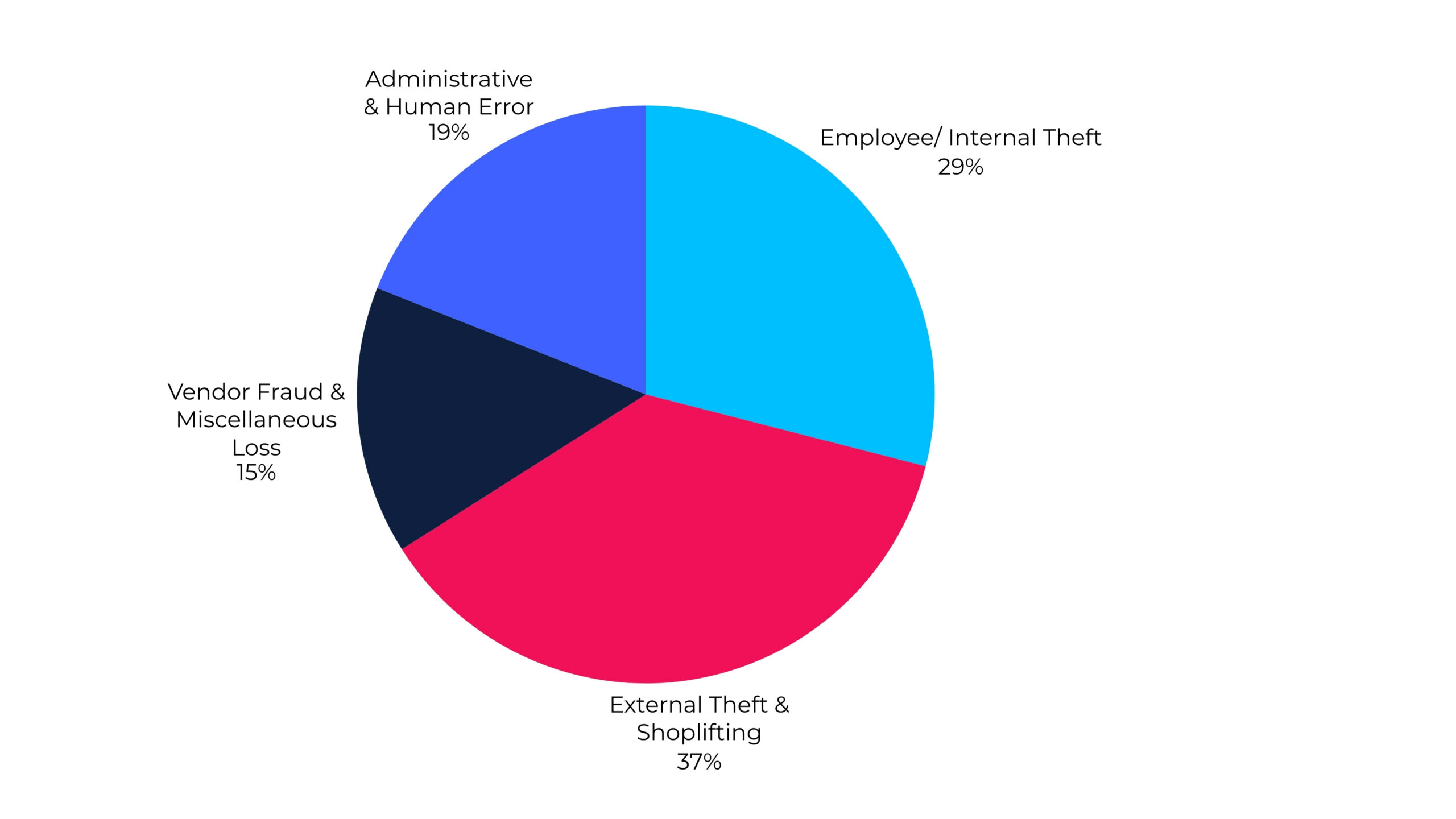
Estimated Sources of Business Shrink
Industry research from retail loss-prevention studies consistently shows that shrink is usually driven by a combination of internal theft, external theft, administrative mistakes, and operational inconsistencies. While percentages vary by industry and business type, the breakdown below reflects commonly cited estimates across retail and service environments.
This visual is useful because it shows that shrink is not only an external theft issue. Administrative mistakes, employee-related losses, and weak internal controls can represent a significant portion of total loss. That is why drawer audits, no-sale tracking, and reporting visibility matter so much.
Drawer Audits: The Foundation of Accountability
Drawer audits are one of the most effective methods businesses use to maintain cash accountability. A drawer audit compares the expected amount of cash in a register against the actual physical cash count. This process helps identify shortages, overages, and inconsistencies before they become recurring operational problems.
Regular drawer audits improve accountability by creating a documented record of cash activity throughout the day. When activity is tied to employee-level reporting, managers gain clearer visibility into operational behavior and can investigate issues faster.
A strong drawer audit process should include clear opening and closing counts, employee-specific access when possible, consistent shift reconciliation, and defined variance thresholds. Minor discrepancies may happen, but recurring patterns should always be reviewed. Consistent enforcement helps strengthen accountability across the organization.
No-Sale Tracking: A Critical Operational Control
A “no-sale” occurs when a cash drawer opens without a recorded transaction. Although legitimate no-sale events sometimes occur, excessive no-sale activity is often one of the strongest indicators of operational risk.
There are acceptable reasons for a no-sale event, such as making change, accessing receipts, correcting a transaction issue, or troubleshooting the register. However, repeated or excessive no-sales may indicate poor training, unauthorized cash handling, or a potential breakdown in internal controls.
Monitoring no-sale activity allows businesses to identify suspicious behavior patterns, improve accountability, and detect transaction anomalies earlier. Managers should regularly review no-sale frequency alongside refund activity, void reports, discount usage, and cash discrepancies. Daily reporting reviews help identify operational patterns that may otherwise go unnoticed.
Shrink Prevention Requires Operational Discipline
Shrink prevention is not simply about installing security cameras. The businesses that successfully reduce shrink are the ones that combine operational visibility with consistent accountability procedures.
Effective shrink prevention requires transaction-level reporting, employee accountability, strong reconciliation procedures, inventory oversight, permission-based POS controls, and regular operational reviews. These controls create proactive prevention by helping managers detect problems before they become significant losses.
Without strong internal procedures, businesses often discover losses only after they have already affected profitability. With the right systems in place, managers can identify patterns earlier and respond with better training, stronger controls, or more focused investigations.
Where Dual Pricing Fits Into Operational Visibility
Dual pricing is not a cash management control by itself, but it can support a more transparent transaction environment. Under a dual pricing model, customers are shown separate cash and card prices, allowing the business to clearly communicate the cost difference between payment methods.
For example, if a business has a $10.00 cash price and a 3.99% card adjustment, the card price would be approximately $10.40. This makes the cost structure visible to the customer instead of hiding payment acceptance costs inside the base price.
The percentage used in a dual pricing setup may vary depending on the business, processor, location, and applicable compliance requirements. Many businesses use a card price adjustment in the range of approximately 3% to 4%, but the exact percentage should always be reviewed for compliance and properly disclosed at the point of sale.
Dual pricing can also help with reconciliation because the pricing structure is clearly separated by payment type. When cash and card prices are displayed consistently, staff have a clearer framework for explaining totals, receipts are easier to understand, and transaction reporting becomes more transparent.
The Role of Technology in Cash Management
Modern POS systems play a major role in helping businesses improve operational control. Today’s reporting tools provide visibility into cash activity, employee transactions, refund behavior, void patterns, register access, exception reporting, and transaction reconciliation.
This level of visibility allows managers to identify operational inconsistencies faster and make more informed decisions. Technology also helps businesses create stronger audit trails, improve reporting accuracy, and simplify end-of-day balancing procedures.
Some businesses are also leveraging modern POS technology to support dual pricing models. When cash and card pricing are clearly displayed and properly reported, businesses gain better visibility into how customers pay, how fees affect margins, and how transaction types influence reconciliation.
Building a Stronger Cash Handling Culture
Technology alone cannot eliminate shrink. Businesses also need a culture of accountability.
Consistent employee training is essential for maintaining strong cash handling procedures. Staff should understand cash handling expectations, refund authorization procedures, drawer balancing standards, security protocols, reporting requirements, and no-sale policies.
When operational expectations are clearly communicated and consistently enforced, businesses create a stronger foundation for accountability. Employees are less likely to make avoidable mistakes, managers can address issues earlier, and the business benefits from more consistent day-to-day operations.
Why Reporting Visibility Matters
Businesses that lack reporting visibility often struggle to identify the root causes of operational issues. Without clear audit trails and transaction reporting, investigations become more difficult and discrepancies take longer to resolve.
Detailed reporting helps businesses detect unusual activity patterns, improve reconciliation accuracy, strengthen employee accountability, reduce operational inefficiencies, and improve financial oversight. The more visibility businesses have into daily operations, the more effectively they can reduce shrink and protect profitability.
This is especially important as payment behavior continues to shift. According to the
Federal Reserve’s Diary of Consumer Payment Choice, credit and debit cards now account for more than 60% of consumer payments in the United States, making transaction transparency and payment-cost visibility increasingly important for businesses. Dual pricing gives businesses one way to make that cost structure clearer while maintaining transparency with customers.
Cash management controls are not simply accounting procedures. They are essential operational strategies that help businesses protect revenue, improve accountability, and reduce financial risk.
Drawer audits, no-sale tracking, reconciliation procedures, and detailed reporting systems all contribute to stronger operational control. When combined with transparent transaction practices, including dual pricing where appropriate, businesses can improve both internal visibility and customer clarity.
In today’s competitive business environment, operational discipline is one of the most valuable tools businesses can use to strengthen performance, reduce unnecessary losses, and protect long-term profitability.